
How to Grow a YouTube Channel From 0 Subscribers
Starting a YouTube channel from zero subscribers feels overwhelming. You have no audience, no authority, no track record. The platform doesn't know you exist. Every established creator seems miles ahead, and the path from 0 to 1,000 subscribers feels impossible to navigate.
Here's the truth: every channel that matters started at exactly zero. MrBeast had 0 subscribers. MKBHD had 0 subscribers. They didn't start with advantages you lack—they understood how YouTube growth actually works for new channels and executed a strategy designed for where they were, not where they wanted to be.
This guide gives you that exact roadmap. No fluff, no vague advice—just the specific actions that move a channel from 0 to 1,000 subscribers in 2026.
Pick a Niche You Can Dominate
Your first decision determines everything. Most new creators skip this step or choose wrong, then wonder why their channel never gains traction.
Specialization beats variety every time for new channels. When you're starting from zero, YouTube has no data about who should see your content. If you upload a cooking video today, a gaming video tomorrow, and a vlog next week, the algorithm can't figure out your audience. Mixed content confuses the system and kills your reach.
Your job: Pick one specific niche and stick with it for your first 20-30 videos minimum. Not "tech"—"budget smartphone reviews for students." Not "fitness"—"home workouts for busy moms." The narrower your niche, the faster you'll find your audience. You can always expand later once you've built authority.
Know your viewer: Create a specific avatar—age range, problems they're solving, what level they're at. Instead of "people who want to learn guitar," target "25-35 year old professionals who want to learn guitar but only have 30 minutes per day to practice." Read comments on similar channels to find what questions people ask—those are your video ideas.
YouTube Shorts: Your Fastest Growth Engine in 2026
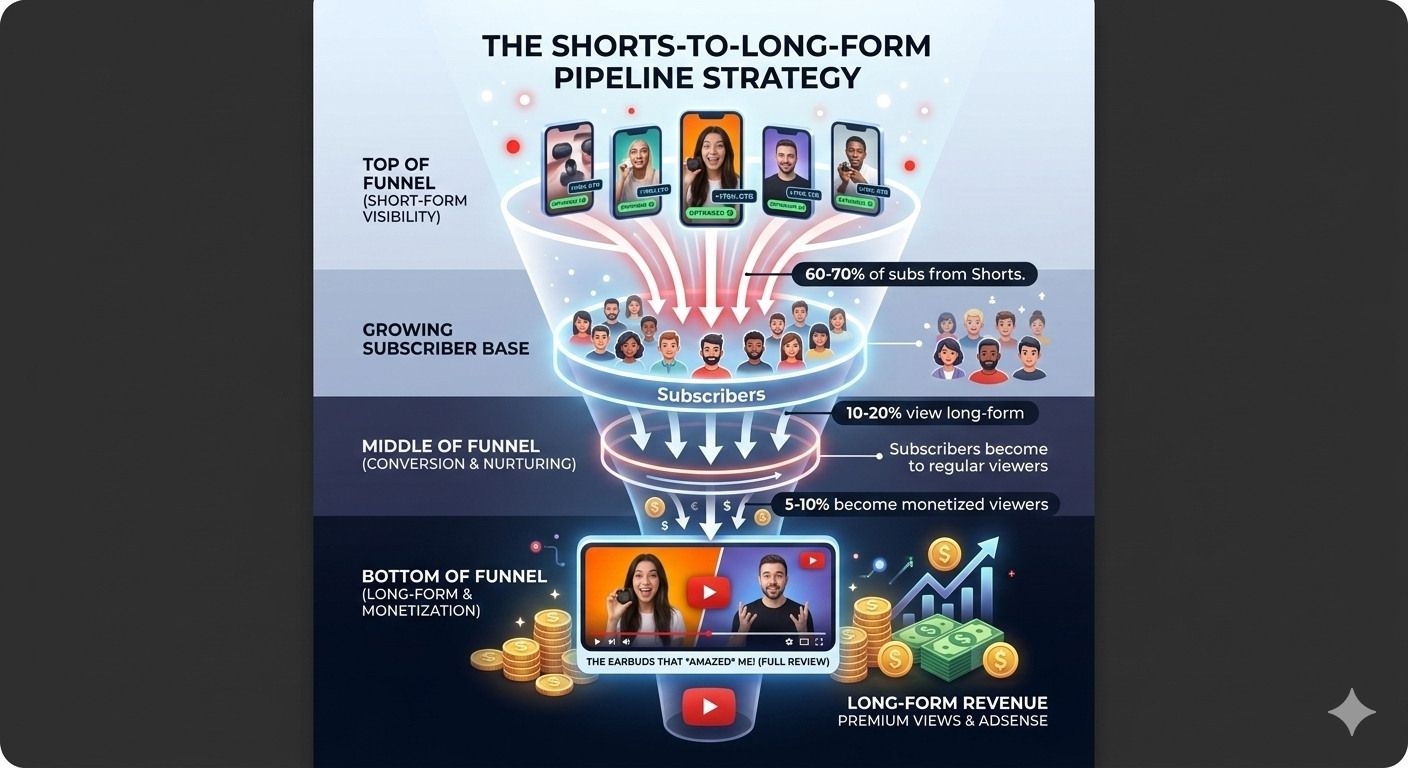
If you're starting from zero in 2026, Shorts are non-negotiable. They're the fastest way to get eyeballs on your content when you have no subscribers. Here's how to use them strategically:
Why Shorts matter for new channels: YouTube actively pushes Shorts to new audiences. You can reach thousands of viewers with zero subscribers. Shorts feed algorithm is separate from long-form—your bad long-form metrics don't hurt your Shorts reach.
The Shorts-to-Long-form pipeline: Use Shorts as a discovery tool. Create 3-5 Shorts for every long-form video. Each Short should tease a concept you cover in depth. End with "Full breakdown in the link below" and use the related video feature. Many creators report 60-70% of new subscribers now come from Shorts.
Shorts that actually convert:
- Hook in first 1 second: No intro, no "hey guys"—start mid-action
- Value in 15-30 seconds: One tip, one takeaway, one moment
- Loop-friendly: End connects back to the beginning
- Clear topic immediately: Viewers scroll fast—make it obvious what they're watching
Common Shorts mistake: Repurposing long-form clips without editing. A 45-second clip from your 10-minute video rarely works. Create Shorts specifically for the format.
Pro TipStruggling with content ideas? GeniusTube analyzes your niche and suggests video topics, hooks, and title variations that perform. Try GeniusTube free →
Optimize Your Channel for Conversions
Your channel page is your homepage. When someone discovers your content and clicks through, you have seconds to convince them to subscribe.
Channel Banner: Include your channel name, what you post about, and your upload schedule. Keep text minimal—banners get cropped on mobile.
Channel Description: The first 150 characters appear in search results. Front-load your value proposition: "Helping busy professionals learn guitar in 30 minutes a day. New tutorials every week."
Channel Trailer: Keep it under 60 seconds. Show your best moments, explain what your channel offers, and end with a clear call to action. Most new creators skip this. Don't.
Organize with playlists by topic. Name playlists with keywords: "Guitar Lessons for Beginners" not "My Videos."
Understanding the New Channel Sandbox
Here's something most new creators don't know: YouTube treats new channels differently. For your first 10-20 videos, you're essentially in a testing phase. Distribution is limited while YouTube figures out who should see your content.
Your videos may get 50-200 views regardless of quality. This is not a shadowban—it's how YouTube protects viewer experience by slowly testing new content with relevant audiences.
How to work with the sandbox: Push through the first 20 videos. Most channels see a breakthrough between video 10-30. Focus on retention over views. If your videos still have no views after 20+ uploads, you likely have a fundamentals issue to address.
Where Your First 100 Subscribers Come From
Your first 100 subscribers won't come from YouTube recommendations. The algorithm doesn't know you yet. You need to go get them.
Direct promotion (40-50%): Share your videos where your target audience already exists—Reddit, Facebook groups, Discord. But provide value first, link second. Answer someone's question in detail, then add "I made a video walking through this step-by-step."
Community engagement (30-40%): Comment genuinely on other channels in your niche. Add to the conversation—people will check out your channel. Never say "subscribe to my channel" in someone else's comments.
Search traffic (10-20%): Optimized titles and descriptions slowly bring in viewers searching for your topics.
Plan on 2-4 months of consistent effort for your first 100 subscribers.
From 100 to 1,000: Building Momentum
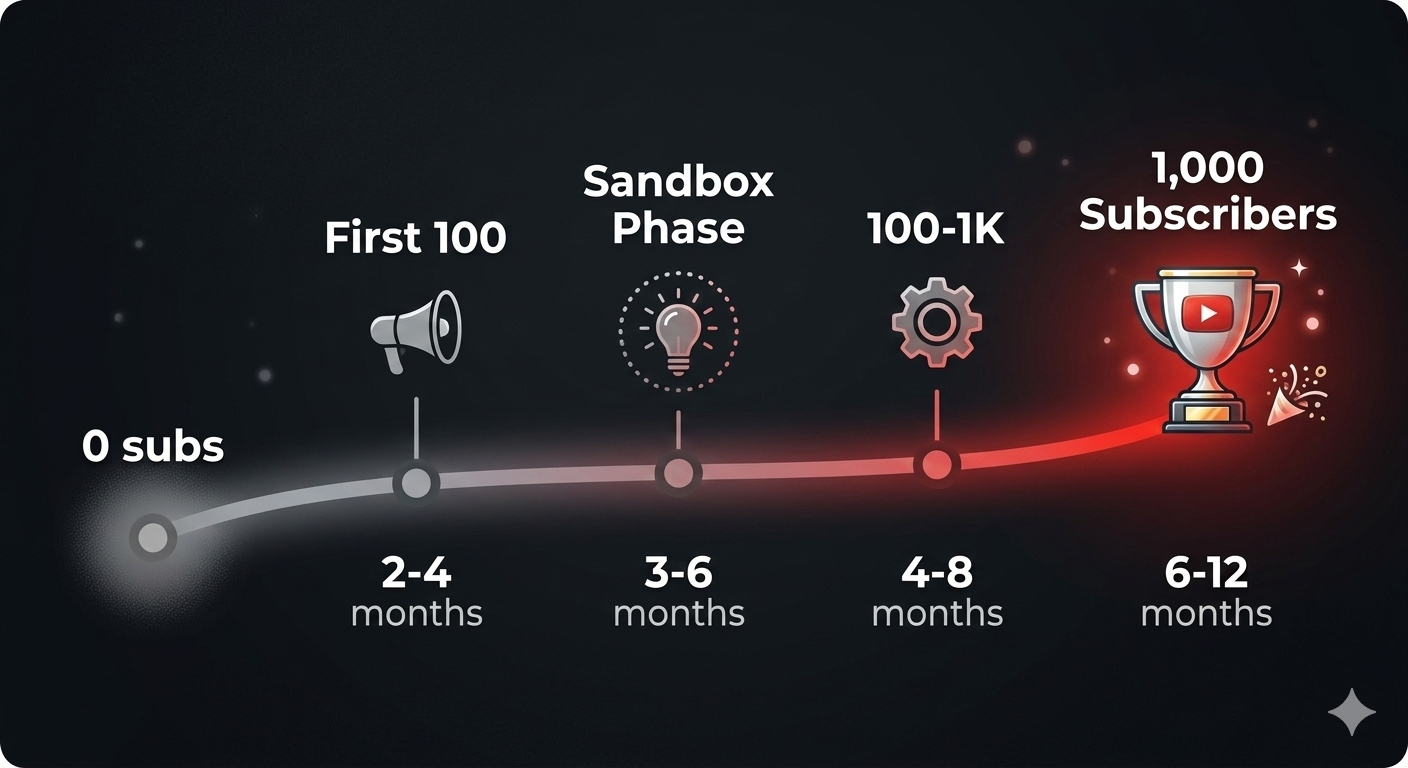
Once you hit 100 subscribers, YouTube has enough data to start testing your videos with larger audiences.
The consistency formula: Pick a realistic publishing schedule and never miss. Once per week beats sporadic bursts. Your 50th video should be noticeably better than your 10th.
Audience connection: Respond to every comment. Ask questions in your videos. Create content based on viewer requests.
Typical timeline: Fast growth (3-6 months) requires daily Shorts + 2-3 long-form per week. Moderate growth (6-12 months) comes from 1-2 long-form per week with solid retention. Focus on improving your metrics month over month—if average views increase 10% each month, you're on track.
🎯 Stop guessing what works. GeniusTube analyzes your channel and tells you which topics, titles, and formats drive your best results. Get your free channel audit →
Mistakes That Cost Months of Growth
Inconsistent branding: Changing your channel name, niche, or visual style every few videos resets the algorithm's understanding. Pick a direction and commit.
Ignoring analytics: YouTube Studio tells you what's working. Low CTR? Fix your thumbnails. Poor retention? Improve your hooks. No data-driven decisions means slow growth.
Over-investing in equipment: Your phone camera and free editing software are enough for your first 50 videos. Upgrade when your content quality is limited by gear, not before.
Buying engagement: Sub4sub, view bots, and purchased subscribers destroy your channel. YouTube detects artificial engagement and penalizes it. These subscribers never watch your content, tanking your metrics.
Quitting too early: Most channels that succeed do so after 6-12 months. The creators who "make it" are often the ones who didn't quit at month 3.
Conclusion
Growing a YouTube channel from 0 subscribers is a marathon. The creators who succeed aren't the most talented—they're the ones who understand the game and refuse to quit when progress feels slow.
Your first 100 subscribers come from hustle and direct promotion. Your first 1,000 come from consistency and optimization. Start with the fundamentals: pick a niche, leverage Shorts, optimize your channel, and publish consistently.
Want to speed up the process? GeniusTube helps you analyze what's working, suggests better titles, and identifies growth opportunities—so you can focus on making great videos.
Every successful YouTuber started at 0 subscribers. The only difference between them and you is that they kept going.
FAQ
Is it too late to start a YouTube channel in 2026? No. YouTube continues to grow, and new creators break through every year. The "too late" narrative has existed since 2012. What's changed is you need better strategy—relying on luck doesn't work anymore. Niche down, use Shorts, and focus on retention.
Should I start with Shorts or long-form videos? Both—but prioritize Shorts for discovery. Create 3-5 Shorts per long-form video. Shorts bring new viewers; long-form builds the relationship and monetization potential.
What equipment do I need to start? A smartphone and free editing software (CapCut, DaVinci Resolve) are enough for your first 50 videos. Get a cheap lapel mic ($20-30) for better audio—that matters more than 4K video. Upgrade gear only when your skills outgrow your equipment.
How often should I post as a new creator? Minimum: 1 long-form per week + 3 Shorts. Consistency beats quantity. Better to post 1 great video weekly than 3 mediocre ones.