
YouTube Algorithm Explained 2026: The Creator's Guide
The YouTube algorithm. The mysterious black box that decides which creators become stars and which stay stuck in obscurity. But what actually happens under the hood in 2026?
Here's the truth: the algorithm isn't a single system that hates small creators or prefers certain niches. It's multiple systems working toward one goal: keep viewers on the platform.
When you understand what the algorithm optimizes for, you stop fighting it and start working with it. Views become predictable. Growth becomes systematic.
What the YouTube Algorithm Actually Is

The YouTube "algorithm" is three separate recommendation systems working together. The Home Feed Algorithm suggests videos based on watch history. The Suggested Videos Algorithm recommends what to watch next. The Search Algorithm ranks results for specific terms.
Each system has different priorities, but they all want the same thing: show viewers content they'll enjoy.
How Your Video Gets Distributed
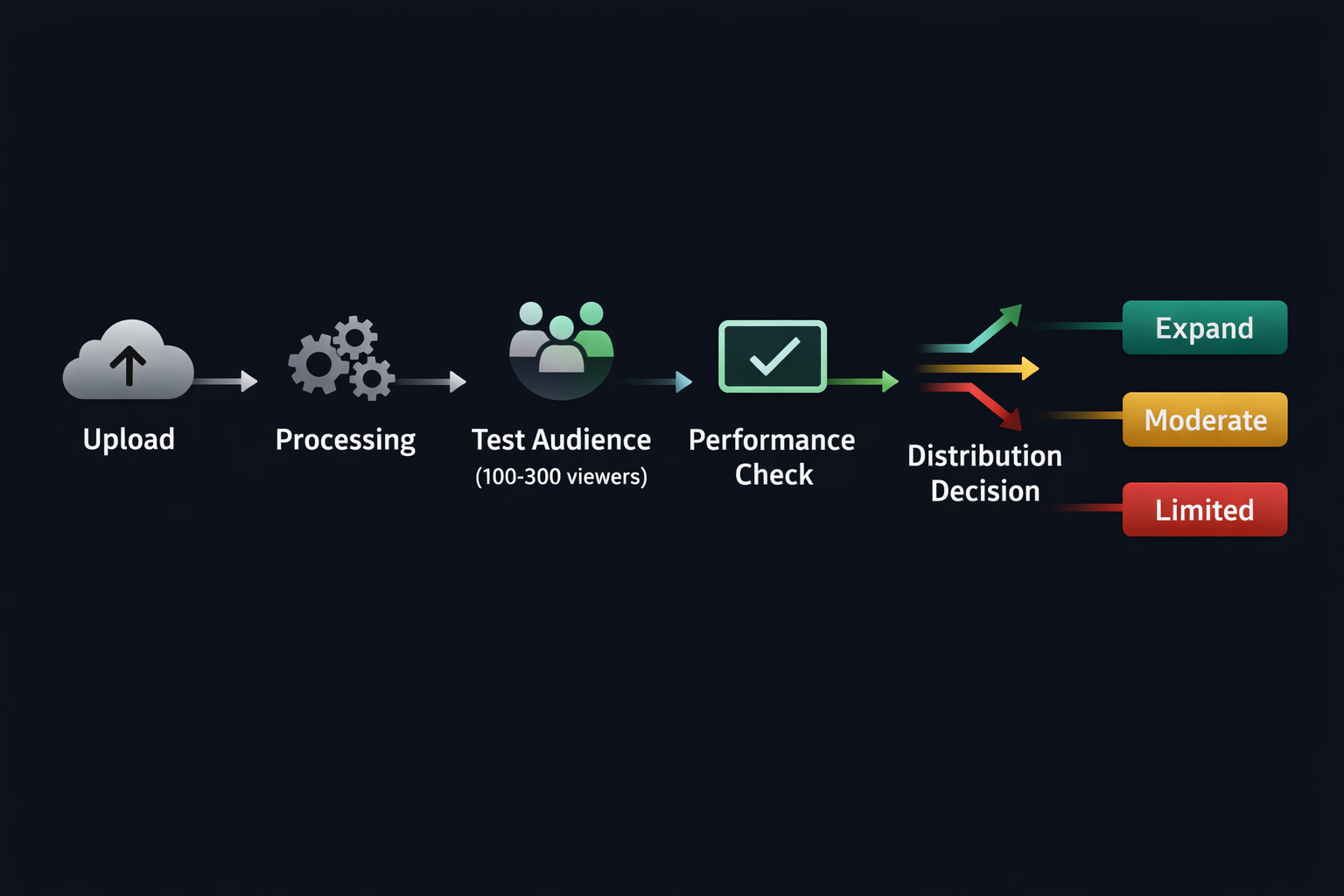
When you publish, YouTube processes your video, analyzes the content, indexes your metadata, and checks for policy violations. Then it shows your video to a small test audience—100-300 viewers for new channels, 300-1,000+ for established ones.
This test audience includes your subscribers, people who've watched similar content, and viewers with interests matching your topic.
The critical window: The first 48 hours decide your video's fate. Perform well with the test audience, and your video gets expanded distribution. Don't, and it stalls.
YouTube tracks click-through rate, average percentage viewed, engagement, and session time. Based on these metrics, it makes one of three decisions: expand aggressively (potential viral), moderate distribution (steady growth), or limited distribution (video stalls—here's why).
The Metrics That Actually Matter
Satisfaction Signals (Most Important)
YouTube measures satisfaction through explicit signals (likes, comments, shares) and implicit signals (re-watches, return viewers, subscriptions after watching). Why does this matter? YouTube's business depends on keeping viewers on the platform. Satisfied viewers come back more often and are more likely to subscribe to Premium.
Click-Through Rate
CTR shows how compelling your video looks. New channels (0-1K subs) should aim for 2-4%, growing channels (1K-10K) for 4-6%, and established channels (10K+) for 6-10%+. Good CTR means your thumbnail grabs attention and your title delivers what viewers expect—see our YouTube thumbnail best practices for optimization tips.
Average Percentage Viewed
APV shows whether you delivered on your thumbnail's promise. Healthy long-form videos see 50%+ overall retention with 65-75% in the first 30 seconds. Healthy Shorts need 75%+ completion rate.
Session Time
This metric measures how long viewers stay on YouTube after watching your video. If they watch your video then click to another, that's positive. If they close YouTube, that's negative. Use end screens, playlists, and series to keep viewers engaged with the platform.
The Test Audience System
This is where most videos succeed or fail. For new channels, YouTube primarily shows your video to people who watch similar content in your niche—a small sample of 100-300 viewers. Established channels get a mix of subscribers and non-subscribers, 300-1,000+ viewers.
Performance thresholds vary by niche. Competitive niches like gaming and tech reviews face higher CTR thresholds (3-4%+) and retention expectations (55%+ in first 30 seconds). Less competitive niches like tutorials have lower thresholds but more emphasis on session time and return viewers.
Most of your video's fate is determined in the first 48 hours because that's when most test audience watches, early performance predicts long-term performance, and YouTube allocates distribution resources based on early signals.
📊 Understand your algorithm performance. GeniusTube breaks down your CTR, retention, and engagement—so you know what's working and what to fix. Analyze your channel free →
Different Algorithms for Different Format
Long-Form Videos (8+ minutes) prioritize session time and 50%+ retention. What works: deep content, 10-20 minute length, stories, educational formats, and series.
YouTube Shorts (under 60 seconds) prioritize swipe rate and 75%+ completion. What works: fast cuts, hooks in the first second, trending audio, 30-45 second length, entertainment value.
Live Streams prioritize concurrent viewer retention and chat engagement. What works: consistent schedule, interactive content, strong community building, converting viewers to subscribers.
What's New in 2026
YouTube has shifted from watch time to satisfaction as the primary metric. Satisfaction signals now outrank raw watch time—videos viewers genuinely enjoy perform better even if shorter.
Shorts and long-form algorithms are now officially decoupled. Performance in one format doesn't affect the other, so you need separate optimization strategies for each.
YouTube now prioritizes viewer lifetime value—content that creates loyal, returning viewers over one-time viral hits. Consistency and branding matter more than ever.
YouTube's AI is much better at understanding video content without perfect metadata. Good content gets discovered even with imperfect SEO, but misleading metadata hurts more because the algorithm detects mismatches.
Common Myths Debunked
"The Algorithm Hates Small Creators" — The algorithm doesn't have feelings. Small channels get smaller test audiences initially and have less data to work with, but the algorithm rewards performance, not size.
"Posting at Specific Times Guarantees More Views" — Timing matters but is secondary to content quality. A great video posted at 3am will outperform a mediocre video at "optimal time."
"Shorts Kill Long-Form Reach" — Shorts and long-form use different algorithms. Performance in one doesn't hurt the other. Use both strategically: Shorts for discovery, long-form for depth and monetization.
"Clickbait Always Works" — Clickbait might boost initial CTR, but it hurts long-term channel health. The algorithm learns when thumbnails don't deliver and reduces future impressions.
Practical Optimization
Before Publishing: Research your topic on YouTube and analyze top performers. Front-load keywords in your title. Start with a strong hook and deliver value throughout.
During Publishing: Match format to content depth. Post 1-2 hours before your audience's peak time. Add chapters, enable captions, and use end screens.
After Publishing: Monitor CTR in the first 24 hours. Swap thumbnails if CTR is low after 24-48 hours. GeniusTube can help you identify what's working and where to optimize. Respond to every comment to build community early.
Conclusion
The YouTube algorithm isn't your enemy. It's a tool for matching content with viewers who'll enjoy it.
The creators who thrive aren't the ones who "hack" the algorithm. They're the ones who understand what viewers actually want, create genuinely satisfying content, optimize based on data, and iterate over time.
Stop fighting the algorithm. Start understanding it. Start working with it. Start growing.